Health Awareness

Supporting Lung Cancer Patients and Carers Along the Treatment Pathway 

November 2025

Facebook icon

.st0{fill:#00857C;} X icon

Linkedin icon

Email icon

Empowering Patients and Carers Through Knowledge and Engagement 

Supporting individuals diagnosed with lung cancer and those who care for them is key throughout every stage of the lung cancer treatment pathway. To address this need, MSD in the UK, with the Roy Castle Lung Cancer Foundation (RCLCF), have co-created the booklet “Understanding Treatment Options in Lung Cancer: A Guide for Patients and Carers”.

This comprehensive resource is specifically designed to support Non-Small Cell Lung Cancer (NSCLC) and Small Cell Lung Cancer (SCLC) patients and their carers.

Lung cancer treatment pathways continue to evolve and can often seem complex or overwhelming. Navigating these pathways and having access to reliable and clear health information can enhance the experiences of both patients and carers1

The booklet draws on insights from individuals living with lung cancer and healthcare professionals connected to the Roy Castle Lung Cancer Foundation (RCLCF). These perspectives have shaped a step-by-step companion guide to help patients and carers understand lung cancer treatment options. The booklet offers clear definitions, outlines treatment options, provides prompts for key questions to ask at each stage, and includes tick boxes to help track progress, with the aim to encourage active involvement and discussion in care.

The Importance of Involving Patients and Carers 

Research shows that when patients actively participate in their treatment decisions, outcomes and overall experiences improve2. A lung cancer diagnosis may bring forth a wide range of emotions, not only for the individual, but also for those who support them. The booklet encourages patients to communicate openly with their healthcare team and to seek out services that promote both their physical and emotional wellbeing. “Understanding Treatment Options in Lung Cancer” outlines the range of available treatments, including prehabilitation and rehabilitation.

At MSD in the UK, our commitment is to place patients at the heart of all we do. We aim to inspire patient communities to engage proactively with healthcare systems and empower them to advocate for their own health. This booklet was developed to provide patients and carers with the information and support they need to navigate the complexities of the lung cancer treatment pathway and to have informed, meaningful discussions about their care. 


1 The Patients Association. Advancing Health Equity Through CORE: A New Approach to Inclusive Communication. 2024; Available from: Advancing Health Equity Through CORE: A New Approach to Inclusive Communication | The Patients Association [Accessed October 2025] 

2 NHS England. Involving people in their own care. n.d.; Available from: NHS England » Involving people in their own care [Accessed October 2025] 

GB-NON-11709 | October 2025


Health Awareness

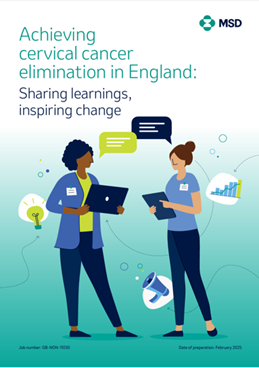
Achieving Cervical Cancer Elimination in England: Sharing Learnings, Inspiring Change

March 2025

Share this article

Facebook icon

.st0{fill:#00857C;} X icon

Linkedin icon

Email icon

In 2023, MSD launched the Race to Elimination campaign to showcase local areas on the road to cervical cancer elimination and inspire country-wide action. Now, taking stock of the local good practice uncovered through our ‘micro-elimination roadshow’, we’re sharing learnings to accelerate action towards elimination.

What is the opportunity?

An estimated 850 cervical cancer deaths every year – more than two women every day.[1] Nearly all cases of cervical cancer are caused by human papillomavirus (HPV), and 99.8% of cervical cancer cases are preventable through HPV vaccination, cervical screening, and early treatment of cell changes detected.[1] This provides a unique opportunity to eliminate the impact of this disease on women, their families and society.

Recognising this opportunity, in 2020, the World Health Organization (WHO) set a global strategy to work towards the elimination of cervical cancer,[2] and many individual countries have since picked up the baton in developing their own strategies for elimination. Australia, for example, is on track to be the first country to eliminate cervical cancer as soon as 2035.[3]

Where are we now?

In November 2023, NHS England joined other leading countries by making its own commitment to eliminate cervical cancer by 2040.[4] While the ambition has been set, the challenge is not insignificant and variation persists between local areas in cervical screening and HPV vaccination coverage rates.[5],[6]

Achieving cervical cancer elimination in England: sharing learnings, inspiring change

At MSD, we believe that the answers to unlocking progress in the Race to Elimination lie close to home. Local areas across the country are successfully increasing HPV vaccination and cervical screening coverage rates, and piloting new models of preventive care to improve access for underserved groups.  In this context, these pockets of good practice are meeting, or even exceeding, the WHO’s thresholds, or tackling the inequalities in access experienced by some communities. In doing so, they are proof that tailored, community-focused approaches can bring us closer to hitting the WHO’s targets.

The Race to Elimination campaign has celebrated success in a number of areas across the UK – including Northumberland, Cumbria, Stockport, Liverpool and Worcestershire. Through local events held in partnership with local leaders and practitioners, we have uncovered the factors behind local progress and lessons that can be learned for the whole country.

These case studies showcase areas celebrated during the Race to Elimination, and sets out reflections on how this progress can be adapted and replicated in communities across the country.

To find out more about how we can work together to make cervical cancer elimination a reality, read our new report here

[1] Cancer Research UK, Cervical cancer statistics. Last accessed February 2024.

[2] The World Health Organisation, Global strategy to accelerate the elimination of cervical cancer as a public health problem, November 2020. Last accessed February 2024.

[3] The Guardian, Australia on track to eliminate cervical cancer by 2035 amid rising HPV vaccination rates, February 2023. Last accessed February 2025.

[4] NHS England, NHS sets ambition to eliminate cervical cancer by 2040, November 2023. Last accessed February 2025.

[5] UK Health Security Agency, Human papillomavirus (HPV) vaccine coverage estimates in adolescents in England: academic year 2023 to 2024, January 2025. Last accessed February 2025.

[6] NHS Digital, Cervical Screening Programme, England – 2023-2024, November 2024. Last accessed February 2025.

GB-NON-11031 | February 2024

Health Awareness

Supporting Carers in Lung Cancer

August 2024

Share this article

Facebook icon

.st0{fill:#00857C;} X icon

Linkedin icon

Email icon

How can we support individuals who are caring for their loved ones with lung cancer? 

In collaboration with the Roy Castle Lung Cancer Foundation (RCLCF), MSD in the UK have developed a booklet specifically aimed at supporting and guiding individuals who are caring for their loved ones with lung cancer, often known as carers. A carer is someone who looks after a family member, partner, or friend that requires assistance and support during their lung cancer journey. The care they provide is unpaid and can involve practical or emotional support1

The booklet, How can I support my loved one with Lung Cancer?’, contains valuable insights from Roy Castle Lung Cancer Foundation’s patient and carer volunteers. These insights provide information that they found useful when they or their loved ones received their diagnosis. Offering prompts for questions to ask at different stages of diagnosis and treatment, important definitions, and information about available support for carers, the booklet aims to empower individuals to effectively advocate for the needs and concerns of their loved ones throughout their lung cancer journey.  

This booklet has been fully funded and developed by MSD, with input from Roy Castle Lung Cancer Foundation

Why carers?

According to research from the Global Lung Cancer Coalition (GLCC), a worldwide organisation representing those with lung cancer, many individuals with lung cancer rely on their family and friends for support2. These carers often take on various responsibilities, such as offering emotional support, accompanying their loved ones to medical appointments, asking questions during appointments, and providing practical assistance at home. However, these carers may require additional information and support to effectively fulfill their caregiving role. 

At MSD in the UK, we put patients at the centre of everything we do and it’s critical that we understand, respect, and honour the experiences of patients and those supporting them. We encourage patient communities to become their own health advocates, make informed decisions and be partners in engaging with the health care systems. This booklet was designed to equip those caring for their loved one with the necessary information to support and advocate for them throughout their lung cancer diagnosis and treatment. 

Lorraine Dallas, the Director of Prevention, Information & Support at the Roy Castle Lung Cancer Foundation, emphasises the importance of this guide in helping individuals cope with their loved one’s lung cancer diagnosis.

“When someone you love is diagnosed with lung cancer, it can feel overwhelming. This guide helps, giving the key information that you need to prepare yourself and support someone living with lung cancer.”

Lorraine Dallas, Director of Prevention, Information & Support, Roy Castle Lung Cancer Foundation

MSD is a Trusted Information Creator accredited by the Patient Information Forum. The PIF TICK logo assures readers that MSD’s health information production process adheres to ten criteria, including meeting the genuine needs of individuals, involving end-users in resource creation, and considering health inequalities. 

We would love suggestions on how we could do better and things we should do more of. Email our Medical Information team at: medicalinformationuk@msd.com.


1 NHS England. Who is considered a carer? n.d.; Available from: https://www.england.nhs.uk/commissioning/comm-carers/carers/ [Accessed January 2025]

2 2021 Patient Experience Survey. Global Lung Cancer Coalition. 2021; Available from: https://www.lungcancercoalition.org/surveys/2021-patient-experience-survey/ [Accessed January 2025]

GB-NON-10717 | January 2025


Health Awareness

MSD highlights progress on addressing health inequalities in cancer in England 

May 2024

Share this article

Facebook icon

.st0{fill:#00857C;} X icon

Linkedin icon

Email icon

How can we learn from the work of Cancer Alliances in reducing health inequalities at a local level?

MSD in the UK have published the report, Driving health equity in cancer: Practical examples from Cancer Alliances, demonstrating the progress Cancer Alliances in England are making towards addressing health inequalities.

The publication, Driving health equity in cancer: Practical examples from Cancer Alliances, brings together a collection of case studies of local projects within Cancer Alliances across the country that aim to overcome the health inequalities in cancer care and outcomes in their area. It highlights practical steps that can be taken, such as working with organisations in the local community, to reach underserved or hard-to-reach populations – who are often more at risk of certain cancer types but don’t readily engage with the health system.

Bringing together practical examples in this way is intended to inspire cancer services and local communities to think differently about the opportunities available to support populations impacted by health inequalities by showcasing steps that can be taken to support them and extend and improve their lives.

The project was funded and led by MSD in the UK, working with Cancer Alliances to bring together case studies of the crucial work they have been undertaking over the course of many years.

We are grateful to NHS England National Healthcare Inequalities Improvement Programme Directors and to Macmillan Cancer Support for their endorsement for this project – providing feedback and forewords for the publication:

Professor Peter Johnson, National Clinical Director for Cancer, and Professor Bola Owolabi, Director of the National Healthcare Inequalities Improvement Programme, said:

“The case studies in this report showcase the innovative and responsive ways in which we hoped that Cancer Alliances and other organisations would implement the Core20PLUS5 programme – in their local communities, shaping their work around the community’s specific needs. We have enjoyed hearing about these case studies throughout the project and hope they inspire others, as they have inspired us, to continue our life-saving and important work in addressing health inequalities in cancer across England.”

Claire Taylor MBE, Chief Nursing Officer, and Professor Richard Simcock, Chief Medical Officer, at Macmillan Cancer Support, said:

“Eliminating health inequalities is becoming an increasing priority in the UK as we continue to see widening variation in cancer outcomes. This report offers positive and practical ways to improve health equity with useful insights from others’ key learnings and also further resources you may wish to access.” 

Health inequalities have a direct impact on the risk of getting cancer, the speed with which someone is diagnosed, and their likelihood of surviving – MSD’s October 2022 report, Levelling up: what does it mean for the less survivable cancers in England?, analysed national data from some of the least survivable cancers and found that only 49% of people living in the most deprived quintile are diagnosed with cancer at an early stage (stage 1 or 2), compared to 58% of people from the least deprived quintile.1

It is vital that the Government and NHS continue to focus on tackling inequalities to achieve the early diagnosis and survival ambitions set out in the NHS Long Term Plan.2

Benson Fayehun, MSD UK Oncology Business Unit Head

“Addressing health inequalities is deeply personal to me and is one of the biggest barriers we face to improving the nation’s health. National commitments and leadership help set the tone and direction – but it is through learning from, and innovating with, communities on the ground that we see the action needed to bring about positive change and improve people’s lives.

We are delighted to have been able to bring together some of the fantastic and inspiring work that Cancer Alliances have undertaken in partnership with local charities and community organisations to overcome cultural, physical or logistical barriers to equal healthcare. By sharing these positive examples we hope to inspire others within the health system, local authorities, charities and community groups to think differently about their roles in addressing health inequalities and the opportunities that there are to support their local populations.”

Examples of the fantastic projects Cancer Alliances have been delivering, include:

  • The Alright Me Liver? campaign in Somerset, Wiltshire, Avon & Gloucestershire to improve early detection of liver cancer – one of the less survivable cancers – in deprived communities, who have an increased risk of death from liver cancer.3
  • This Van Can is a mobile health clinic targeting groups at higher risk of prostate cancer in Greater Manchester.
  • You Need to Know campaign in Northeast London to tackle low awareness of womb cancer, where incidence and mortality rates are higher in people of non-white ethnicities and from more deprived communities.4,5
  • Efforts in Southeast London to ensure patients with learning difficulties receive optimal care

[1] MSD, Levelling up: what does it mean for the less survivable cancers in England?, September 2022, job number: GB-NON-06239. Available: https://www.msd-uk.com/wp-content/uploads/sites/43/2022/10/Levelling-up_What-does-it-mean-for-the-less-survivable-cancers-in-England.pdf

[2] NHS England (2019). NHS long term plan: chapter three: cancer. Available: https://www.longtermplan.nhs.uk/online-version/chapter-3-further-progress-on-care-quality-and-outcomes/better-care-for-major-health-conditions/cancer/#:~:text=This%20Long%20Term%20Plan%20sets,least%20five%20years%20after%20diagnosis. Accessed April 2024

[3] Mayor of Bristol (2023). Alright my liver? Liver cancer awareness month. Available: https://thebristolmayor.com/2023/10/01/alright-my-liver/ Accessed JApril 2024.

[4] Cancer Research UK, Uterine cancer statistics. Available: https://www.cancerresearchuk.org/health-professional/cancer-statistics/statistics-by-cancer-type/uterine-cancer#heading-Zero Accessed April 2024.

[5] Cancer Research UK, Uterine cancer statistics,. Available: https://www.cancerresearchuk.org/health-professional/cancer-statistics/statistics-by-cancer-type/uterine-cancer#heading-Zero Accessed April 2024


GB-NON-09360 | May 2024

Health Awareness

MSD & the fight against Hepatitis C continues!

April 2024

Share this article

Facebook icon

.st0{fill:#00857C;} X icon

Linkedin icon

Email icon

How are we partnering with the NHS to deliver hepatitis C elimination?

Building on the success of the initial 5 year programme, the world leading initiative to find, test and treat people at risk of hepatitis C has been extended for another 2 years.

MSD is proud to be part of the NHS Elimination programme which is a first of its kind programme, involving a close collaboration between NHS England, the Hepatitis C Trust, Operational Delivery Networks (ODNs), the pharmaceutical industry (Abbvie, Gilead and MSD), His Majesty’s Prison and Probation Service (HMPPS), the Department of Health and Social Care (DHSE) and the UK Health Security Agency (UKHSA).

Chronic hepatitis C infection, caused by the hepatitis C virus (HCV), is thought to affect over 62,600 people in England.[1] Symptoms can take years to develop and as a result, many people are unaware that they are living with the virus. If left untreated, HCV can lead to serious health problems including cirrhosis (scarring of the liver), liver failure and liver cancer (hepatocellular carcinoma, HCC).[2] This not only places a heavy burden on the individual, but on the NHS and the economy.[3.4]

In 2016, the UK Government signed up to the World Health Organisation (WHO) Global Health Sector Strategy (GHSS) on Viral Hepatitis which commits participating countries to the elimination of HCV as a major public health threat by 2030. NHS England is working to surpass the WHO target through a number of initiatives including a unique and innovative partnership – The Hepatitis C Elimination Programme.[2]

In this unique 7 year programme, a series of ‘elimination initiatives’ are being provided by the NHS and industry, which aim to identify potential patients, test for infection and offer treatment to everyone who needs it. Working with 24 Operational Delivery Networks, which were set up across England to help manage hepatitis C services at a local level, MSD has supported elimination through four elimination initiatives:

Point of Care Testing (POCT): In partnership with Cepheid, we are rolling out Cepheid rapid HCV RNA testing equipment to prisons, community projects and outreach services. Delivering rapid finger-prick testing that delivers results in 1 hour.

Patient Search Identification (PSI): A case-finding tool which searches for coded HCV risk factors in patient records in primary care settings to identify potentially at-risk patients that should be reviewed and, if appropriate, tested.

Peer-to-Peer Support (P2P): Through partnership with the Hepatitis C Trust (THCT), we are providing a network of peer volunteers with lived experience of HCV to provide education, encouragement and support directly to patients throughout the treatment and care journey. Through this partnership, we are also working to develop a community-led model to reach out to south Asian communities. These communities have a higher prevalence of HCV infection than the general population, but have often been excluded from receiving culturally relevant information and interventions.

Community Liaison Officers (CLO): Community Liaison Officers work with the ODN clinical teams to align and coordinate hepatitis C services and provide outreach to patients attending clinics, as well as working in homeless hostels, night shelters and drug treatment centres.

To speak to a member of the team, please contact Elimination Programme Lead, Kuldip Sembhi at: Kuldip.sembhi@msd.com  


1 UKHSA Hepatitis C in England 2023. Available at: https://www.gov.uk/government/publications/hepatitis-c-in-the-uk/hepatitis-c-in-england-2023. Last accessed March 2024

2 UKHSA Hepatitis C in England 2022 Report: Working to eliminate hepatitis C as a public health problem Available at: https://assets.publishing.service.gov.uk/government/uploads/system/uploads/attachment_data/file/1057271/HCV-in-England-2022-full-report.pdf. Last Accessed March 2024

3 Singh J, Longworth L, Estimating The Cost Of Liver Transplantation In Patients Diagnosed With Chronic Hepatitis C And B In The UK, 2014. Available online via: http://valueinhealthjournal.com/article/S1098-3015(14)02760-0/fulltext. Last accessed March 2024

4 Wright M, Grieve R, Roberts J, Main J, Thomas HC, Alexander G, et al., Health benefits of antiviral therapy for mild chronic hepatitis C: Randomized controlled trial and economic evaluation.  Health Technology Assessment.  2006:10

GB-NON-09120 | April 2024