
Did you know that large language models (LLMs) can serve as highly capable multitaskers?
These are advanced artificial intelligence systems trained on vast amounts of text data, enabling them to understand, generate and interact using human-like language across a wide range of topics. Today’s household names for LLMs, or rather the systems you might be familiar with, could be Google Gemini, ChatGPT or Deepseek. When configured as AI agents, LLMs can perform multiple tasks in parallel, with each being tailored to a specific function. At MSD Research Labs (MRL), this capability is helping researchers stay focused on what matters most: advancing critical drug discovery and development.
In today’s data-rich research environment, AI agents are proving to be invaluable partners. They assist scientists in navigating complex datasets, refining hypotheses, and executing both routine and specialised tasks with remarkable efficiency. What once required significant time and resources can now be streamlined, freeing up researchers to concentrate on high-impact work.
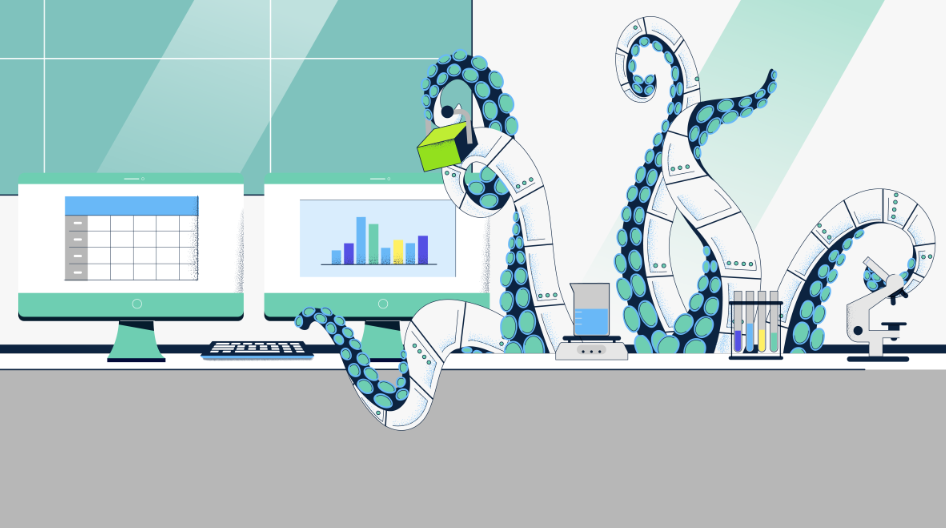
A long-standing aspiration in the field of artificial intelligence is the creation of systems that can independently learn, reason, and contribute to scientific breakthroughs, what some refer to as an “AI scientist”. While this vision remains firmly in the future, recent progress in agent-based AI is bringing us closer to that horizon. These agents can now coordinate large language models, machine learning (ML) tools, and other technologies to form dynamic, conversable systems capable of reflective learning and reasoning.
Rather than replacing human expertise, AI enhances it. By breaking down complex challenges into manageable subtasks, AI agents can take on roles that support targeted problem-solving and the integration of scientific knowledge. One of their greatest strengths lies in automation: repetitive tasks such as data cleaning or initial analysis are efficiently handled by AI, allowing scientists to focus on strategic thinking and innovation.
At MRL, this human-AI collaboration is not just a forward-thinking vision, it’s a reality that’s accelerating the pace of discovery.
GB-NON-11757 | August 2025