
Innovation

MSD unveils state-of-the-art laboratory facility at the Francis Crick Institute  

September 2024

Share this article

We have officially opened our interim laboratory facility housed in the roof space of The Francis Crick Institute, marking an exciting milestone in the growth of our discovery presence in London, and our ongoing collaboration with this world-renowned research centre.  

George Addona, Senior Vice President of MSD Research Labs, and Sir Paul Nurse, CEO of The Francis Crick Institute, welcomed Lord Vallance KCB FRS FMedSci FRCP HonFREng, Minister of State for Science, at the opening ceremony held on 5th September. Together, we celebrated our collective drive towards groundbreaking discovery science that advances human health. 

Located at the heart of London’s Knowledge Quarter, this is the latest addition to MSD’s integrated global R&D network, that is dedicated to seeking solutions to some of the most complex health challenges faced by patients around the world.   

This latest location will foster an effective partnership between our scientists and their counterparts at the Crick, working side-by-side towards the common goal of scientific innovation. The space is leased for an initial period of 3 years in preparation for the 2027 opening of our new MSD Research Laboratories, London and UK Headquarters, in Kings Cross.  

The opening of SkyLab, with the central London location offering valuable proximity to the capital’s Knowledge Quarter, builds on MSD’s 100-year heritage in the UK. The new facility will accommodate approximately 50 MSD researchers, who join MSD’s rapidly expanding interdisciplinary London-based team of over 100 scientists with expertise spanning chemistry, pharmacology, neuroscience, and immunology, to unlock new frontiers in early-stage drug discovery. 

MSD’s commitment to operating responsibly is evident in the design and construction of this 11,800 sqft facility, which adheres to the highest sustainability standards. Ensuring environmental stewardship is at the heart of MSD’s wider R&D presence reflects our mission for a safe and healthy future for people and communities. 

These developments represent another addition to our discovery capabilities as we continue to expand our R&D footprint in the UK and Europe, in anticipation of the opening of our new London home in 2027. 

Lord Vallance, Minister of State for Science, Research and Innovation, commented:

“The opening of Skylab represents a fantastic opportunity to advance UK science and is a vote of confidence in the UK as an investment destination”

George Addona, Senior Vice President and Head of Discovery, Preclinical and Translational Medicine, MSD Research Laboratories, commented:  

“Our talented team of London-based discovery scientists are an integral part of MSD’s global research network, and we are pleased to expand our research presence in London’s Knowledge Quarter.”


GB-NON-10053 | September 2024

Our People

Employee volunteering – many ways to make a difference

August 2024

Share this article

Facebook icon

.st0{fill:#00857C;} X icon

Linkedin icon

Email icon

All year round our employees take part in a full range of volunteering experiences, from refereeing at swimming events, to painting walls, or mentoring young people.

All MSD employees are given 40 hours of volunteering time to support a cause they feel passionate about. Every effort counts and individuals have found many ways to make a unique positive impact.

Refereeing at the swimming British Championships

MSD Sales Manager, Adrian, has been volunteering every year for the past twelve years at swimming events across the country. After his daughters started competing in the sport, Adrian become involved in the swimming events. He is now proud to be one of the few referees from a diverse background and that the volunteering policy allows him to pursue this passion. Through his commitment, he has now progressed to become a referee and receives invitations to events across the country, including the Olympic trials in London.

One of his most cherished moments from his volunteering experience is when he was asked to present the medals at the end of the British Championships. To Adrian’s surprise, he had the incredible opportunity to present a medal to his own daughter!

Brightening up community spaces

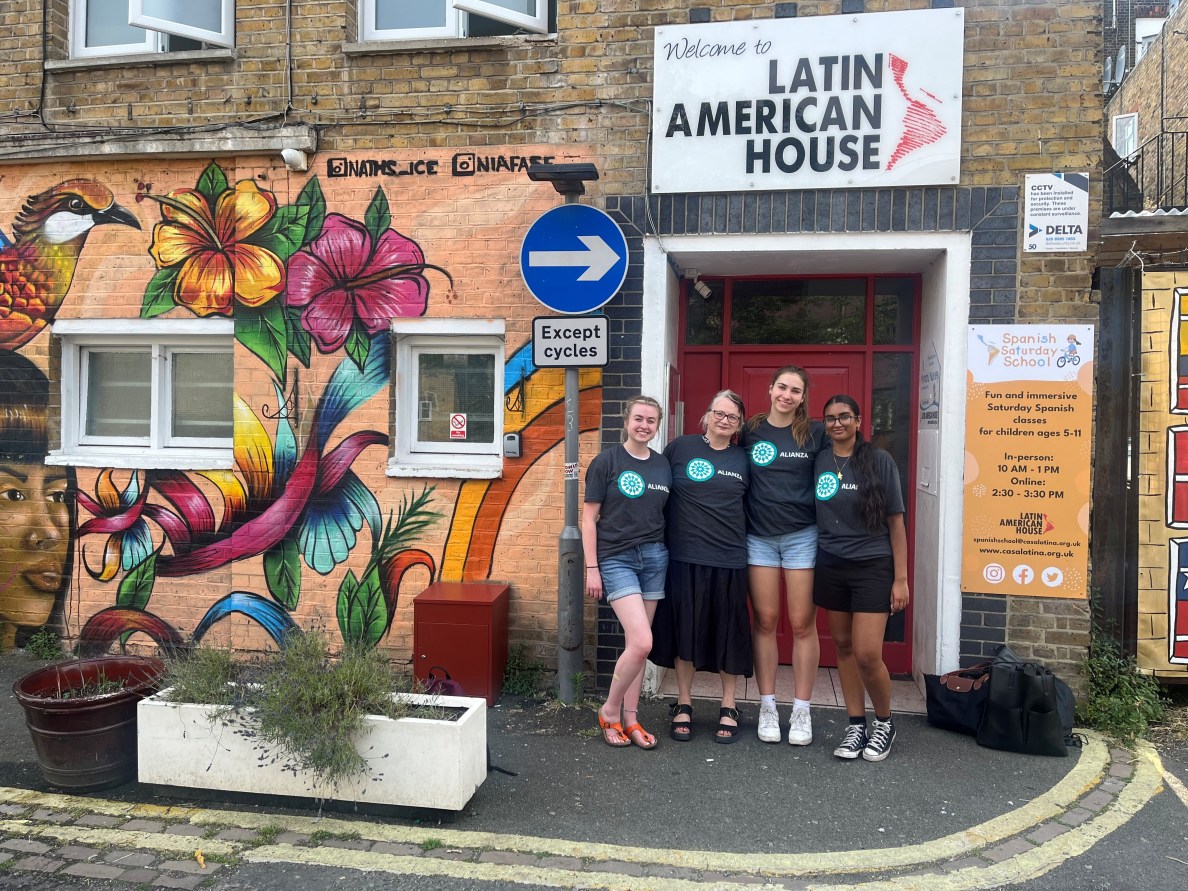
The ALIANZA UK team recently put their volunteering hours to fantastic use by supporting the Latin American House charity! Our MSD volunteers embarked on a two-day project to paint the office areas of the Latin American House Community Hub, specifically the Brazil and Colombia rooms.

Despite the scorching hot weather, the team did a great job and found it incredibly rewarding to the see the transformation. The ALIANZA UK team contributed to creating a more welcoming and vibrant environment for staff, clients and visitors.

Keeping history alive

One of our employees has found immense joy in utilising her volunteering hours at The American Museum in Bath, a museum of American art and culture surrounded by beautiful gardens.

Working in the herb shop, MSD Sales Manager, Janet, collects herbs from the garden to create Tussie Mussies, a colonial American item to sell to visitors. She volunteers regularly and has started taking her daughter along to volunteer with her!

Being one of the four Americans working at the museum, Janet also appreciates the chance to have conversations with a variety of people about her home country, its history and culture. Volunteering has not only provided her with a connection to her home country but has had a positive impact on her mental wellbeing and Janet encourages others to explore volunteering opportunities available to them!

Mentoring for positive change

Vicky dedicates one hour a week to Motivation, Commitment and Resilience (MCR) Pathways, a national mentoring programme that aims to make a meaningful difference to the lives of young people. Volunteering for one-hour a week during the school term, she consistently provides positive support to teenagers facing various challenges.

Vicky underwent training before being matched with her mentee, ensuring she had the necessary skills for the role, with the programme striving to pair mentors with mentees who share similar interests to create meaningful connections.

She claims ‘At first, I was nervous and wasn’t sure what I had to offer but I believe we all have the necessary skills to simply be there for a young person. All they need is someone to be interested in them.’

Our employees have a number of team initiatives also under way including a donation drive and volunteering at the Whitechapel Mission Charity this coming autumn.

The diverse volunteering experiences of our MSD employees exemplify the variety of ways to make a positive impact. These stories illustrate that regardless of the form it takes, volunteering allows individuals to connect to their passions, make a difference and creative positive change in their communities and beyond.

GB-NON-09983 | August 2024

Partnerships

Supporting Carers in Lung Cancer

August 2024

Share this article

Facebook icon

.st0{fill:#00857C;} X icon

Linkedin icon

Email icon

How can we support individuals who are caring for their loved ones with lung cancer? 

In collaboration with the Roy Castle Lung Cancer Foundation (RCLCF), MSD in the UK have developed a booklet specifically aimed at supporting and guiding individuals who are caring for their loved ones with lung cancer, often known as carers. A carer is someone who looks after a family member, partner, or friend that requires assistance and support during their lung cancer journey. The care they provide is unpaid and can involve practical or emotional support1

The booklet, How can I support my loved one with Lung Cancer?’, contains valuable insights from Roy Castle Lung Cancer Foundation’s patient and carer volunteers. These insights provide information that they found useful when they or their loved ones received their diagnosis. Offering prompts for questions to ask at different stages of diagnosis and treatment, important definitions, and information about available support for carers, the booklet aims to empower individuals to effectively advocate for the needs and concerns of their loved ones throughout their lung cancer journey.  

This booklet has been fully funded and developed by MSD, with input from Roy Castle Lung Cancer Foundation

Why carers?

According to research from the Global Lung Cancer Coalition (GLCC), a worldwide organisation representing those with lung cancer, many individuals with lung cancer rely on their family and friends for support2. These carers often take on various responsibilities, such as offering emotional support, accompanying their loved ones to medical appointments, asking questions during appointments, and providing practical assistance at home. However, these carers may require additional information and support to effectively fulfill their caregiving role. 

At MSD in the UK, we put patients at the centre of everything we do and it’s critical that we understand, respect, and honour the experiences of patients and those supporting them. We encourage patient communities to become their own health advocates, make informed decisions and be partners in engaging with the health care systems. This booklet was designed to equip those caring for their loved one with the necessary information to support and advocate for them throughout their lung cancer diagnosis and treatment. 

Lorraine Dallas, the Director of Prevention, Information & Support at the Roy Castle Lung Cancer Foundation, emphasises the importance of this guide in helping individuals cope with their loved one’s lung cancer diagnosis.

“When someone you love is diagnosed with lung cancer, it can feel overwhelming. This guide helps, giving the key information that you need to prepare yourself and support someone living with lung cancer.”

Lorraine Dallas, Director of Prevention, Information & Support, Roy Castle Lung Cancer Foundation

MSD is a Trusted Information Creator accredited by the Patient Information Forum. The PIF TICK logo assures readers that MSD’s health information production process adheres to ten criteria, including meeting the genuine needs of individuals, involving end-users in resource creation, and considering health inequalities. 

We would love suggestions on how we could do better and things we should do more of. Email our Medical Information team at: medicalinformationuk@msd.com.


1 NHS England. Who is considered a carer? n.d.; Available from: https://www.england.nhs.uk/commissioning/comm-carers/carers/ [Accessed January 2025]

2 2021 Patient Experience Survey. Global Lung Cancer Coalition. 2021; Available from: https://www.lungcancercoalition.org/surveys/2021-patient-experience-survey/ [Accessed January 2025]

GB-NON-10717 | January 2025


Partnerships

MSD highlights progress on addressing health inequalities in cancer in England 

May 2024

Share this article

Facebook icon

.st0{fill:#00857C;} X icon

Linkedin icon

Email icon

How can we learn from the work of Cancer Alliances in reducing health inequalities at a local level?

MSD in the UK have published the report, Driving health equity in cancer: Practical examples from Cancer Alliances, demonstrating the progress Cancer Alliances in England are making towards addressing health inequalities.

The publication, Driving health equity in cancer: Practical examples from Cancer Alliances, brings together a collection of case studies of local projects within Cancer Alliances across the country that aim to overcome the health inequalities in cancer care and outcomes in their area. It highlights practical steps that can be taken, such as working with organisations in the local community, to reach underserved or hard-to-reach populations – who are often more at risk of certain cancer types but don’t readily engage with the health system.

Bringing together practical examples in this way is intended to inspire cancer services and local communities to think differently about the opportunities available to support populations impacted by health inequalities by showcasing steps that can be taken to support them and extend and improve their lives.

The project was funded and led by MSD in the UK, working with Cancer Alliances to bring together case studies of the crucial work they have been undertaking over the course of many years.

We are grateful to NHS England National Healthcare Inequalities Improvement Programme Directors and to Macmillan Cancer Support for their endorsement for this project – providing feedback and forewords for the publication:

Professor Peter Johnson, National Clinical Director for Cancer, and Professor Bola Owolabi, Director of the National Healthcare Inequalities Improvement Programme, said:

“The case studies in this report showcase the innovative and responsive ways in which we hoped that Cancer Alliances and other organisations would implement the Core20PLUS5 programme – in their local communities, shaping their work around the community’s specific needs. We have enjoyed hearing about these case studies throughout the project and hope they inspire others, as they have inspired us, to continue our life-saving and important work in addressing health inequalities in cancer across England.”

Claire Taylor MBE, Chief Nursing Officer, and Professor Richard Simcock, Chief Medical Officer, at Macmillan Cancer Support, said:

“Eliminating health inequalities is becoming an increasing priority in the UK as we continue to see widening variation in cancer outcomes. This report offers positive and practical ways to improve health equity with useful insights from others’ key learnings and also further resources you may wish to access.” 

Health inequalities have a direct impact on the risk of getting cancer, the speed with which someone is diagnosed, and their likelihood of surviving – MSD’s October 2022 report, Levelling up: what does it mean for the less survivable cancers in England?, analysed national data from some of the least survivable cancers and found that only 49% of people living in the most deprived quintile are diagnosed with cancer at an early stage (stage 1 or 2), compared to 58% of people from the least deprived quintile.1

It is vital that the Government and NHS continue to focus on tackling inequalities to achieve the early diagnosis and survival ambitions set out in the NHS Long Term Plan.2

Benson Fayehun, MSD UK Oncology Business Unit Head

“Addressing health inequalities is deeply personal to me and is one of the biggest barriers we face to improving the nation’s health. National commitments and leadership help set the tone and direction – but it is through learning from, and innovating with, communities on the ground that we see the action needed to bring about positive change and improve people’s lives.

We are delighted to have been able to bring together some of the fantastic and inspiring work that Cancer Alliances have undertaken in partnership with local charities and community organisations to overcome cultural, physical or logistical barriers to equal healthcare. By sharing these positive examples we hope to inspire others within the health system, local authorities, charities and community groups to think differently about their roles in addressing health inequalities and the opportunities that there are to support their local populations.”

Examples of the fantastic projects Cancer Alliances have been delivering, include:

  • The Alright Me Liver? campaign in Somerset, Wiltshire, Avon & Gloucestershire to improve early detection of liver cancer – one of the less survivable cancers – in deprived communities, who have an increased risk of death from liver cancer.3
  • This Van Can is a mobile health clinic targeting groups at higher risk of prostate cancer in Greater Manchester.
  • You Need to Know campaign in Northeast London to tackle low awareness of womb cancer, where incidence and mortality rates are higher in people of non-white ethnicities and from more deprived communities.4,5
  • Efforts in Southeast London to ensure patients with learning difficulties receive optimal care

[1] MSD, Levelling up: what does it mean for the less survivable cancers in England?, September 2022, job number: GB-NON-06239. Available: https://www.msd-uk.com/wp-content/uploads/sites/43/2022/10/Levelling-up_What-does-it-mean-for-the-less-survivable-cancers-in-England.pdf

[2] NHS England (2019). NHS long term plan: chapter three: cancer. Available: https://www.longtermplan.nhs.uk/online-version/chapter-3-further-progress-on-care-quality-and-outcomes/better-care-for-major-health-conditions/cancer/#:~:text=This%20Long%20Term%20Plan%20sets,least%20five%20years%20after%20diagnosis. Accessed April 2024

[3] Mayor of Bristol (2023). Alright my liver? Liver cancer awareness month. Available: https://thebristolmayor.com/2023/10/01/alright-my-liver/ Accessed JApril 2024.

[4] Cancer Research UK, Uterine cancer statistics. Available: https://www.cancerresearchuk.org/health-professional/cancer-statistics/statistics-by-cancer-type/uterine-cancer#heading-Zero Accessed April 2024.

[5] Cancer Research UK, Uterine cancer statistics,. Available: https://www.cancerresearchuk.org/health-professional/cancer-statistics/statistics-by-cancer-type/uterine-cancer#heading-Zero Accessed April 2024


GB-NON-09360 | May 2024

Responsibility

MSD for Mothers Reaches 30 Million Women Worldwide

May 2024

Share this article

Facebook icon

.st0{fill:#00857C;} X icon

Linkedin icon

Email icon

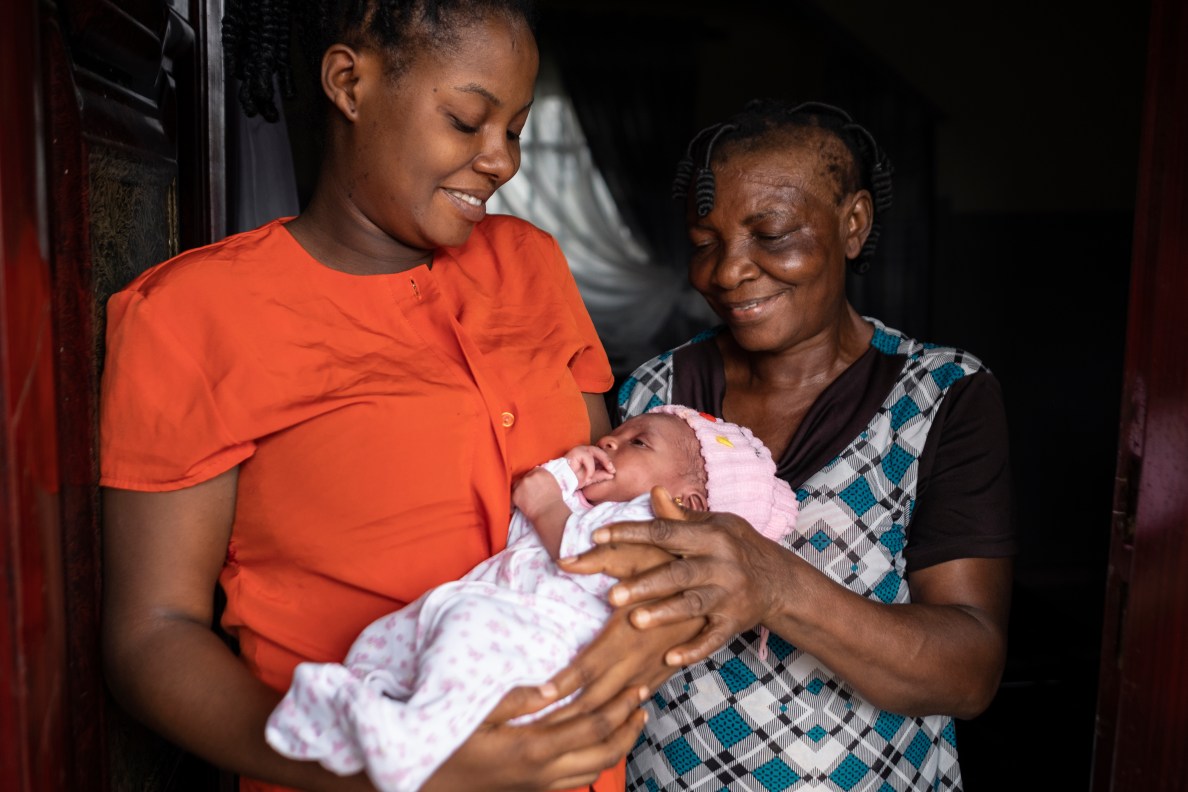
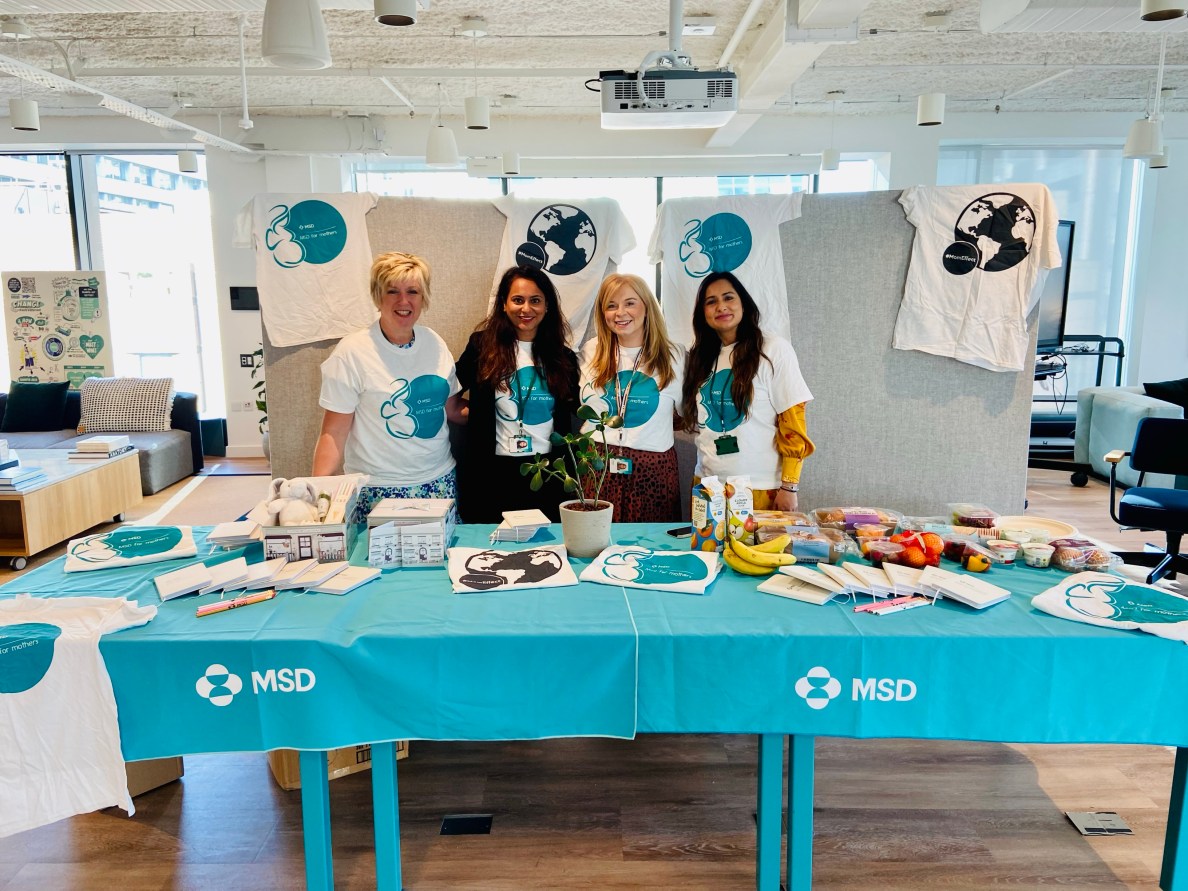
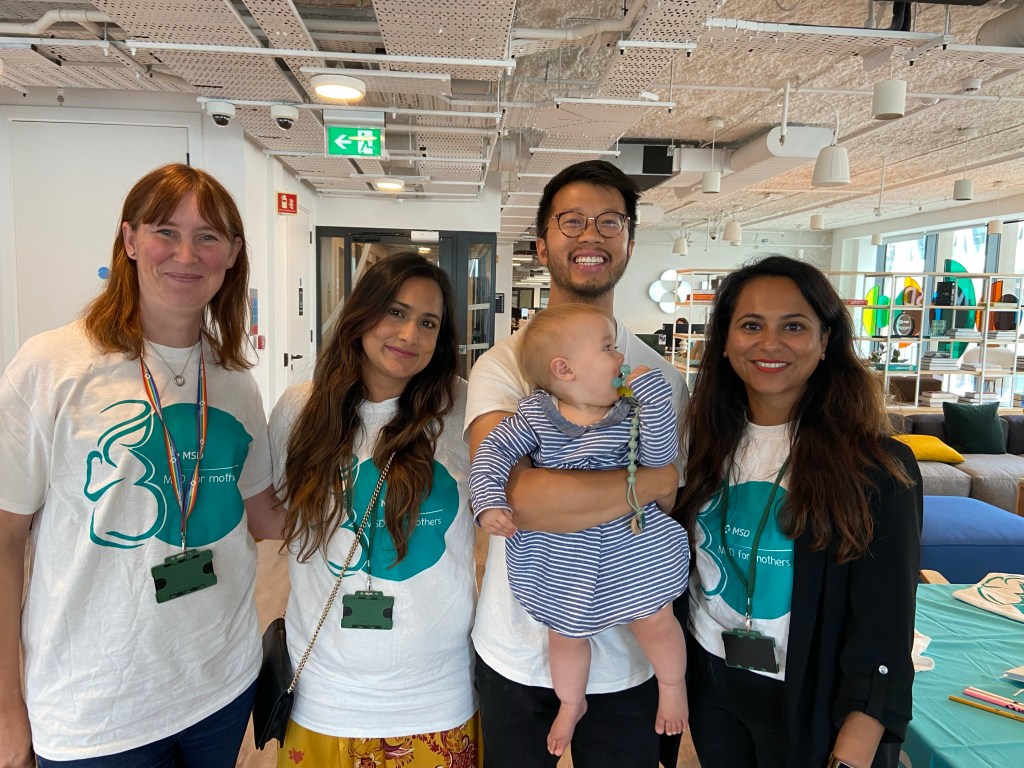
MSD has announced that MSD for Mothers has reached more than 30 million women through programs promoting safe, high-quality and respectful maternal health care – surpassing its goal of reaching 25 million women by 2025.

MSD for Mothers is dedicated to finding solutions to end maternal mortality with over 200 programs in more than 70 countries designed to deliver on the unique maternal health needs of women around the world.

While the maternal health landscape has experienced progress in recent years, maternal mortality remains a reality for too many. According to the World Health Organization, a maternal death occurred nearly every two minutes in 2020, with almost 95% occurring in low-income or lower middle-income countries. Through MSD for Mothers, the company upholds its commitment to expanding access to health and accelerating progress toward one of the United Nations’ Sustainable Development Goal targets: to reduce the global maternal mortality ratio to less than 70 per 100,000 live births by 2030.

To advance this ambition, MSD for Mothers works closely with various public and private sector collaborators to strengthen health systems for the long-term and address the diverse needs of moms, babies and families globally.

“I am so proud of our company’s long-standing commitment to our MSD for Mothers initiative, which is dedicated to improving maternal health outcomes around the world,” said Allison Goldberg, president of our company’s foundation. “Through MSD for Mothers, we have now helped more than 30 million women access high-quality, life-saving care around pregnancy and childbirth – surpassing our goal of reaching 25 million women by 2025. This milestone serves as a reminder that much work is left to be done, and we remain committed to helping create a world where no woman has to die while giving life.”

To learn more about this milestone achievement, read the company’s full announcement here.


GB-NON-09434 | May 2024

Innovation

Bridging the gap between industry and academic research with Open Targets

April 2024

Share this article

Facebook icon

.st0{fill:#00857C;} X icon

Linkedin icon

Email icon

MSD is pleased to be the latest partner to join the Open Targets Consortium, a public-private partnership that aims to tackle high attrition rates of potential new therapies in clinical trials, aiding MSD’s drug discovery efforts in London and globally. 

Research shows that clinical trials are more likely to succeed when the link between the disease and the drug target is supported by evidence from genetics and genomics studies.[1] By generating and interpreting the evidence that informs decision making in drug target discovery, the consortium helps bridge the gap between industry and academic research.

Joining other industry and research partners, MSD will support Open Targets to accelerate the development of safe and effective medicines by leveraging cutting-edge technologies to identify, prioritise, and validate potential drug targets.

MSD’s expertise in drug discovery, combined with the consortium’s comprehensive tool that optimises target validation, extensive research portfolio and cutting-edge informatics approaches to address all elements of human health and disease, enables a specific focus on immunology and inflammation, oncology, and neurodegeneration.

Founded in 2014, the partnership endeavours to share data, methods and knowledge generated by the consortium with the wider scientific community.

“We are pleased to join the Open Targets consortium and believe this unique public-private model will allow us to leverage large-scale genomics data along with advances in AI and machine learning, so we can better understand the underlying drivers of disease and enable more efficient target discovery,” said Iya Khalil, Vice President and Head of Data, AI and genome sciences, MSD Research Laboratories. “We look forward to working closely with our partners at Open Targets.”


  1. Ochoa et al. (2022) Human genetics evidence supports two-thirds of the 2021 FDA-approved drugs. Nature Reviews Drug Discovery, Rusina et al. (2023) Genetic support for FDA-approved drugs over the past decade. Nature Reviews Drug Discovery

GB-NON-09349 | April 2024

Partnerships

MSD & the fight against Hepatitis C continues!

April 2024

Share this article

Facebook icon

.st0{fill:#00857C;} X icon

Linkedin icon

Email icon

How are we partnering with the NHS to deliver hepatitis C elimination?

Building on the success of the initial 5 year programme, the world leading initiative to find, test and treat people at risk of hepatitis C has been extended for another 2 years.

MSD is proud to be part of the NHS Elimination programme which is a first of its kind programme, involving a close collaboration between NHS England, the Hepatitis C Trust, Operational Delivery Networks (ODNs), the pharmaceutical industry (Abbvie, Gilead and MSD), His Majesty’s Prison and Probation Service (HMPPS), the Department of Health and Social Care (DHSE) and the UK Health Security Agency (UKHSA).

Chronic hepatitis C infection, caused by the hepatitis C virus (HCV), is thought to affect over 62,600 people in England.[1] Symptoms can take years to develop and as a result, many people are unaware that they are living with the virus. If left untreated, HCV can lead to serious health problems including cirrhosis (scarring of the liver), liver failure and liver cancer (hepatocellular carcinoma, HCC).[2] This not only places a heavy burden on the individual, but on the NHS and the economy.[3.4]

In 2016, the UK Government signed up to the World Health Organisation (WHO) Global Health Sector Strategy (GHSS) on Viral Hepatitis which commits participating countries to the elimination of HCV as a major public health threat by 2030. NHS England is working to surpass the WHO target through a number of initiatives including a unique and innovative partnership – The Hepatitis C Elimination Programme.[2]

In this unique 7 year programme, a series of ‘elimination initiatives’ are being provided by the NHS and industry, which aim to identify potential patients, test for infection and offer treatment to everyone who needs it. Working with 24 Operational Delivery Networks, which were set up across England to help manage hepatitis C services at a local level, MSD has supported elimination through four elimination initiatives:

Point of Care Testing (POCT): In partnership with Cepheid, we are rolling out Cepheid rapid HCV RNA testing equipment to prisons, community projects and outreach services. Delivering rapid finger-prick testing that delivers results in 1 hour.

Patient Search Identification (PSI): A case-finding tool which searches for coded HCV risk factors in patient records in primary care settings to identify potentially at-risk patients that should be reviewed and, if appropriate, tested.

Peer-to-Peer Support (P2P): Through partnership with the Hepatitis C Trust (THCT), we are providing a network of peer volunteers with lived experience of HCV to provide education, encouragement and support directly to patients throughout the treatment and care journey. Through this partnership, we are also working to develop a community-led model to reach out to south Asian communities. These communities have a higher prevalence of HCV infection than the general population, but have often been excluded from receiving culturally relevant information and interventions.

Community Liaison Officers (CLO): Community Liaison Officers work with the ODN clinical teams to align and coordinate hepatitis C services and provide outreach to patients attending clinics, as well as working in homeless hostels, night shelters and drug treatment centres.

To speak to a member of the team, please contact Elimination Programme Lead, Kuldip Sembhi at: Kuldip.sembhi@msd.com  


1 UKHSA Hepatitis C in England 2023. Available at: https://www.gov.uk/government/publications/hepatitis-c-in-the-uk/hepatitis-c-in-england-2023. Last accessed March 2024

2 UKHSA Hepatitis C in England 2022 Report: Working to eliminate hepatitis C as a public health problem Available at: https://assets.publishing.service.gov.uk/government/uploads/system/uploads/attachment_data/file/1057271/HCV-in-England-2022-full-report.pdf. Last Accessed March 2024

3 Singh J, Longworth L, Estimating The Cost Of Liver Transplantation In Patients Diagnosed With Chronic Hepatitis C And B In The UK, 2014. Available online via: http://valueinhealthjournal.com/article/S1098-3015(14)02760-0/fulltext. Last accessed March 2024

4 Wright M, Grieve R, Roberts J, Main J, Thomas HC, Alexander G, et al., Health benefits of antiviral therapy for mild chronic hepatitis C: Randomized controlled trial and economic evaluation.  Health Technology Assessment.  2006:10

GB-NON-09120 | April 2024

Responsibility

Shining a light on our work in Diversity, Equity, and Inclusion

March 2024

Share this article

Facebook icon

.st0{fill:#00857C;} X icon

Linkedin icon

Email icon

MSD’s Chief Diversity Officer, Celeste Warren, strives to ensure that our policies and practices provide an equal opportunity for all so that our workforce reflects the diversity of the world. This she says “enables us to better understand the needs of the patients, health care providers and customers we serve,

And that means embedding a culture of diversity, equity and inclusion at every level of the organisation, a commitment that’s central to our business growth as well as to our employees’ well-being.

At MSD in the UK, our work is more than just scientific: we recognise that we have an important part to play in tackling health disparities to drive improvements in healthcare access and outcomes for patients across the UK.

We believe in creating a more equitable and inclusive society where everyone has the best chance of staying healthy and well, regardless of their background, identity and circumstances. 

Diversity, Equity and Inclusion (DEI) are at the centre of everything we do and is part of our ways of working.  Our employees with shared experiences and their allies come together as Employee Business Resource Groups (EBRG’s).  Providing a community and informing change across our business, our EBRGs help everyone at MSD bring their authentic selves to work, and ultimately champion and drive improvements externally in our mission to save and improve lives.  

Prioritising diversity and inclusion benefits employees and our business

We’ve made a lot of progress on our diversity and inclusion efforts in our workplace, including:

    • Strong membership growth across our 10 EBRGs  globally with approximately 21,500 employees who belong to EBRGs, and many of our UK employees are active participants.
    • Launch of an internal Ally Resource Centre to provide access to resources and educational materials to support each employee’s D&I learning journey.
    • Development of an integrated disability inclusion strategy to create a disability-confident workplace culture where people with disabilities feel accepted, connected and can fully contribute.
    • An annual UK Health Equity hackathon, hosted by our LEAD network (League of Employees of African Descent) in collaboration with Eli Lilly’s embRACE brings together over 55 undergraduate students from a range of diverse academic and cultural backgrounds, inviting  curious minds to ‘hack’ the problem of health equity, explore potential solutions, and network. As well an increasing awareness of health equity, the event contributes to a pipeline of diverse talent as the winning group are accelerated through the early talent programme assessments.
    • Our UK EBRG’s have recently driven the implementation of a new ‘Transitioning At Work’ policy, a new ‘Menopause Policy’ and a mandatory ‘Sexual Harassment’ training programme for all employees
    • MSD is proud to be a member of the Patient Information Forum (PIF) and are part of their Trusted Information Creator accreditation scheme (the PIF TICK) – the UK’s only quality mark for health information. We commit that our public-facing materials are produced in line with PIF’s criteria, ensuring that our information is accessible and accurate.

We are on a journey, and are proud to be shining a light on our work so far. Watch our video and follow our stories on social media over the coming weeks.

GB-NON-09023 | February 2024

Our People

A leading people-first employer: Top Employer UK/Europe 2024

January 2024

Share this article

Facebook icon

.st0{fill:#00857C;} X icon

Linkedin icon

Email icon

The Top Employers Institute is the global authority on recognising excellence in people practices and for the seventh year running we have been recognised for demonstrating care for the development and well-being of our people.  

What makes us a Top Employer?  

MSD is certified in seven countries and growing. Being certified as a Top Employer showcases an organisation’s dedication to a better world of work and exhibits this through excellent HR policies and people practices.  The certification covers six HR domains consisting of 20 assessment topics. A detailed analysis of our best practices scored us in areas such as People Strategy, Work Environment, Talent Acquisition, Learning, Diversity, Equity & Inclusion (DE&I) and Wellbeing.

Our top scoring sections were ‘Develop’, ‘Unite’ and ‘Engage’, and we were recognised for some of the important initiatives we have in place in these areas.

In the area of ‘Develop’, our support as well as our employee development programmes have taken us above benchmark, in particular our Talent Growth Framework and LEAD your career programme were identified as exemplar in supporting the individual in their development, acknowledging that development is different for everyone.  

In ‘Unite’ we scored highly in ‘ethics and integrity’ and ‘purpose and values’ which is integral to our work as a pharmaceutical company and we were also recognised for our work in DE&I where we scored an increase of 9% from previous year for our approach and strategy. This past year we have focused on developing both ownership and accountability in the DE&I space.

Other stand out initiatives include the work of our Employee Resource Business Groups who have driven the implementation of a new ‘Transitioning At Work’ policy, a new ‘Menopause Policy’ and a mandatory ‘Sexual Harassment’ training programme for all employees.

Our focus on ‘Wellbeing’ includes our mental health network of trained first aiders, our new early talent mental health group and a varied and regular programme of education on available employee support and benefits.

It is an honour to be validated, certified, and recognised as an employer of choice UK and Europe. We will not rest on our laurels but are committed to continuously evolving and improving our people practices.

                    Top Employers Institute: For a Better World of Work

GB-NON-08845 | January 2024

Partnerships

Eliminating cervical cancer across the UK could save £2.6 billion, new research finds

January 2024

Share this article

Facebook icon

.st0{fill:#00857C;} X icon

Linkedin icon

Email icon

The UK could save £2.6 billion by achieving the WHO global targets for cervical cancer by 2046, landmark new research reveals.

An estimated 3,200 cases of cervical cancer are diagnosed in the UK every year – nine women every day. 99.8% of cervical cancer cases in the UK are caused by HPV, which means that nearly every case of cervical cancer is preventable[i].

Under its global call to action towards elimination, the WHO has set a target incidence of 4 cases of cervical cancer per 100,000 women, to be achieved by countries ensuring that 90% of girls receive human papillomavirus (HPV) vaccination by age 15, 70% of women access cervical screening aged 35 and 45, and 90% of women with pre-cancer and invasive cancer are appropriately treated and managed[ii]. According to the new report – undertaken by OHE and fully funded by MSD – the UK is anticipated to hit these targets by 2046, which would lead to a 23% reduction in the socioeconomic burden of cervical cancer between 2023 and 2046.

The new research comes soon after NHS England’s November announcement that it would be pursuing the elimination of cervical cancer by 2040, noting the potential to save thousands of lives [iii]. And the NHS Vaccination Strategy published in December puts England one step closer to elimination through a range of commitments to improve HPV vaccination coverage rates[iv].

But progress is not guaranteed and there is still a long road to elimination: the latest vaccine coverage data for the routine school-aged HPV immunisation programme in England for the 2022/23 academic year shows that whilst have been some gains, coverage is still behind that recorded pre-COVID-19 pandemic [v].

The report authors call on governments in Scotland, Wales and Northern Ireland to follow England’s lead in pledging to eliminate cervical cancer by 2040 – thereby accelerating the path to elimination across the UK and ensuring equality and consistency in the approach to elimination between the four nations.

To download a copy of the report, click here.

Ben Lucas, Managing Director, MSD UK & Ireland, who commissioned the research, said:

“At MSD, we are dedicated to inspiring country-wide action towards elimination by showcasing the success of areas already hitting WHO targets at the local and national levels. The OHE’s findings on the socioeconomic benefits of eliminating cervical cancer add even more impetus to the race to elimination, but we cannot forget the huge personal impact of this mission. The OHE rightly note the critical importance of overcoming existing inequalities in access to HPV vaccination and cervical screening if we are to make a success of elimination, and I am delighted to see the report set out recommendations on how elimination might work for every part of society.”


[i] Cancer Research UK, Cervical cancer statistics. Last accessed December 2023, available from: https://www.cancerresearchuk.org/health-professional/cancer-statistics/statistics-by-cancer-type/cervical-cancer#heading-Zero

[ii] World Health Organization, Cervical Cancer Elimination Initiative. Last accessed December 2023, Available from: https://www.who.int/initiatives/cervical-cancer-elimination-initiative

[iii] NHS England, NHS sets ambition to eliminate cervical cancer by 2040, 15 November 2023. Last accessed December 2023, available from: https://www.england.nhs.uk/2023/11/nhs-sets-ambition-to-eliminate-cervical-cancer-by-2040/

[iv] NHS England, NHS Vaccination Strategy, December 2023. Last accessed December 2023, available from: https://www.england.nhs.uk/long-read/nhs-vaccination-strategy/

[v] UK Health Security Agency, Official Statistics: Human papillomavirus (HPV) vaccination coverage in adolescents in England: 2022 to 2023. Last accessed January 2023, available from: https://www.gov.uk/government/statistics/human-papillomavirus-hpv-vaccine-coverage-estimates-in-england-2022-to-2023/human-papillomavirus-hpv-vaccination-coverage-in-adolescents-in-england-2022-to-2023

GB-NON-08825 | January 2024