
Ever wondered where a student placement might take you? How about why you should consider one in the pharmaceutical industry?
At MSD in the UK, our Future Talent Programme is designed to empower students to make a real-world impact from day one, giving students the opportunity to gain hands-on, professional experience while learnings new skills and working on innovative projects in the healthcare sector.
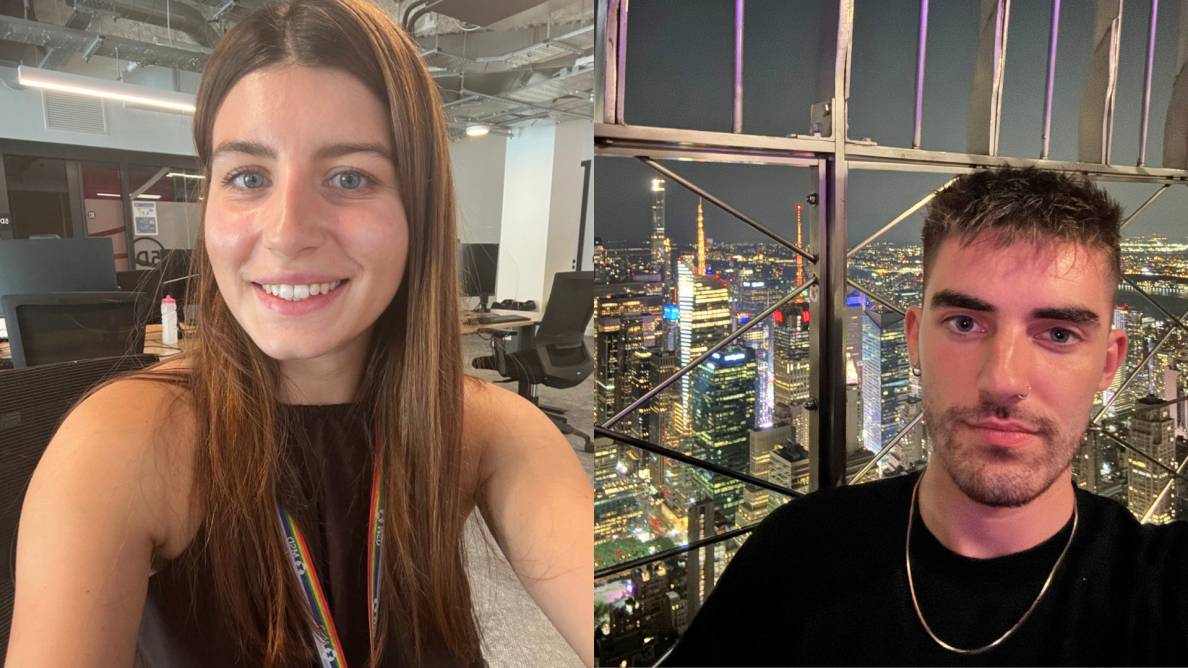
We caught up with Harry and Poppy; previous MSD student placements who have since secured full-time roles to ask what drew them to the programme.
It’s nice to catch up with you both! Firstly, can you tell us about what you studied at university?
Poppy: I studied Biomedical Science . At school, I had always loved science and maths because I enjoyed subjects with clear answers. Human health particularly interested me, but at 18 I was not yet sure which area of science I wanted to pursue. Biomedical Science felt like the right choice because it gave me a broad foundation while allowing me to explore that interest further.
Harry: I also studied BSc Biomedical Science at the University of Birmingham. I’d always been interested in (and good at) science, particularly more the human biology side of things. And while I most enjoyed studying concepts such as human biology, disease, and principles of pharmacology, I knew deep down that I didn’t want to become a doctor or a pharmacist in the future. Hence, Biomedical Science seemed to be a good fit.
It sounds like university was helpful in figuring out where your interests lie. From that experience, what led you to explore opportunities in pharma?
Poppy: During the COVID-19 pandemic, I volunteered in the pathology laboratories at my local hospital. It gave me an opportunity to contribute to the response while also experiencing what it was like to work in the NHS, which was a career path I was considering at the time.
The experience made me realise that I wanted to build on the laboratory skills I had developed while having more contact with healthcare professionals and contributing to the development of new treatments and diagnostic tests.
My university course included a year in industry, and when I saw an internship advertised for a Clinical Trial Coordinator within Global Clinical Trial Operations, I was intrigued. I knew very little about the role or clinical trials, but it seemed to bring together the areas I was looking for in a career.
Harry: I got a flavour for lab work during my time at university; however, I quickly discovered that it just wasn’t quite for me. I thrive being in a collaborative and social environment, and I hated the idea of being couped up in a lab room by myself all day. That’s not to say lab work is a bad career, far from it! It just wasn’t the right fit for ME.
During university, I completed a business-focused module which I really enjoyed. I was drawn to the idea of a career where I could combine both business and commercial acumen with my knowledge and passion for science. Pharma seemed to match that perfectly.

I was drawn to the idea of a career where I could combine both business and commercial acumen with my knowledge and passion for science. Pharma seemed to match that perfectly.

And it’s great that you landed at MSD! Can you tell us more about your student placement at MSD?
Poppy: I completed a placement in Global Clinical Trial Operations as a Clinical Trial Coordinator (CTC) intern.
The year was split into two halves. During the first, I focused on the CTC role and learnt how a clinical trial operates—from setting up a study at a hospital and ensuring patients received the latest trial documents to reviewing finances so that hospitals were paid for their work.
In the second half, after specialist training, I accompanied Clinical Research Associates (CRA) on visits to hospitals conducting the research, known as trial sites. We checked that each trial was being conducted in line with its approved plan, or protocol, and that appropriate oversight and patient-safety measures were in place.
The placement gave me a real insight into everything required to run a clinical trial at a site—there was much more involved than I had ever imagined.
Harry: My placement year was in the Regulatory Affairs department as an Associate Scientist. I gained insight into the execution and management of regulatory submissions to health authorities, whether that be for a new product, or an update to an existing product.
I also had the opportunity to work on a project where I created a best practice guide and presented this back to my team, becoming a subject matter expert in doing so (a fancy title for someone who’s most knowledgeable in a particular area within your team!).
Being a student, I quite liked being thought of as an ‘expert’! But it was great in teaching me to take ownership in leading projects, as well as practicing my presentation skills.
The placement gave me a real insight into everything required to run a clinical trial at a site – there was much more involved than I had ever imagined.
Sounds like you got involved with a lot! Was there anything about the placement which surprised you?
Poppy: I was surprised by how much trust and responsibility the wider team gave us. We were encouraged to take ownership of our work, develop expertise and become valued members of the team rather than simply being treated as placement students.
We were also encouraged to network beyond our immediate teams. That exposure helped me understand the range of careers available within the pharmaceutical industry and gave me the confidence to decide that this was the area of science in which I wanted to build my career.
Harry: The 7AM wake-ups – now that was a shock after being at uni for two years! And how tiring working Monday to Friday 9-5 can feel at first (you quickly get used to it!).
Joking aside, I think I was surprised to learn of just the vast wealth of different job roles and careers available to you within the pharma industry. There are roles I never knew existed, until I was within the company and could learn for myself. I think this insight is so valuable when you’re considering your next steps after university, as you have a greater understanding of what’s available out there to you than you would if you didn’t do a placement.
And do you have any standout highlights from your time here?
Poppy: What I enjoyed most was the combination of learning, responsibility and teamwork. There were eight interns in my department, so we worked closely and supported one another throughout the year.
I also valued the freedom to explore projects beyond my day-to-day role. One highlight was helping to develop a head and neck cancer recruitment newsletter for healthcare professionals, designed to raise awareness of our trials and support patient recruitment. Opportunities like this made me feel that I was making a meaningful contribution rather than simply observing.
Harry: During my placement year, I joined one of MSD’s Employee Business Resource Groups (EBRGs). I became a core team member of the UK Rainbow Alliance, putting my passion for advocating D&I into practice. I got to work on some really cool initiatives – the best being our participation in the Pride in London parade. It was so much fun getting to stand together in solidarity with the LGBTQ+ community with my colleagues and show our support.
In fact, I enjoyed my time in the EBRG so much, that I ended up stepping into the role of co-lead – a role I’ve now been in for almost 2 and a half years! So it provides you with a great stepping stone into a leadership role at an early stage in your career, which looks fantastic on your CV.

Students are such a valued part of the team at MSD and it’s amazing to hear you’ve got so much out of it. How would you say the experience helped you grow?
Poppy: My placement opened my eyes to a completely new area of science. Alongside gaining practical knowledge of clinical trials, I developed essential professional skills, particularly communication, teamwork and confidence. I regularly contributed to meetings and delivered presentations to large groups. Towards the end of my placement, I presented at a departmental meeting attended by more than 100 people – something I would once have found very daunting.
The placement also helped me secure a role as an Associate Clinical Research Associate immediately after graduating, and I have since progressed in the role. I am now preparing to begin a Master’s in Health Economics and Health Policy Analysis. My interest in this area was sparked by a clinical trial I worked on in general medicine, showing how one opportunity can continue to shape the next stage of your career.
Harry: My genuine advice is that doing a placement year is the best thing you can possibly do during your time at university to advance your job prospects for when you graduate. Sadly, the job market these days can be tough, especially with more people graduating than ever before. So you need to consider how you’re going to gain a level of experience and develop yourself professionally so that it differentiates you from others. Doing a placement year does just that.
You learn so many different things: what it’s like to work in an office, collaborating with colleagues of all ages and backgrounds, how to build your professional network, developing key skills which are vital in taking back to university with you – such as presentation and time management skills.
My genuine advice is that doing a placement year is the best thing you can possibly do during your time at university to advance your job prospects for when you graduate.
And finally, do you have a message to anyone considering a student placement?
Poppy: I would strongly encourage anyone considering a student placement to apply. A placement gives you practical experience, builds your confidence and helps you understand what you enjoy—and what you may want from your future career. Be open to roles you have not heard of before; they may introduce you to an area you never knew existed and spark an interest you did not know you had.
Harry: It’s the best thing you can possibly do for your future career prospects, professional and personal development. Do it – you won’t regret it one bit.
But do make sure you get your interview prep nailed down – student placements are notoriously competitive. Let your passion for the opportunity shine through!
Interested in hearing more and applying? Our Future Talent Programme is opening soon.
Make sure you don’t miss out. Register to our Future Talent Community to receive updates on when applications go live.
GB-NON-13420 | August 2026